Morning as a Practice: How New York's Most Considered Households Are Elevating the First Hour
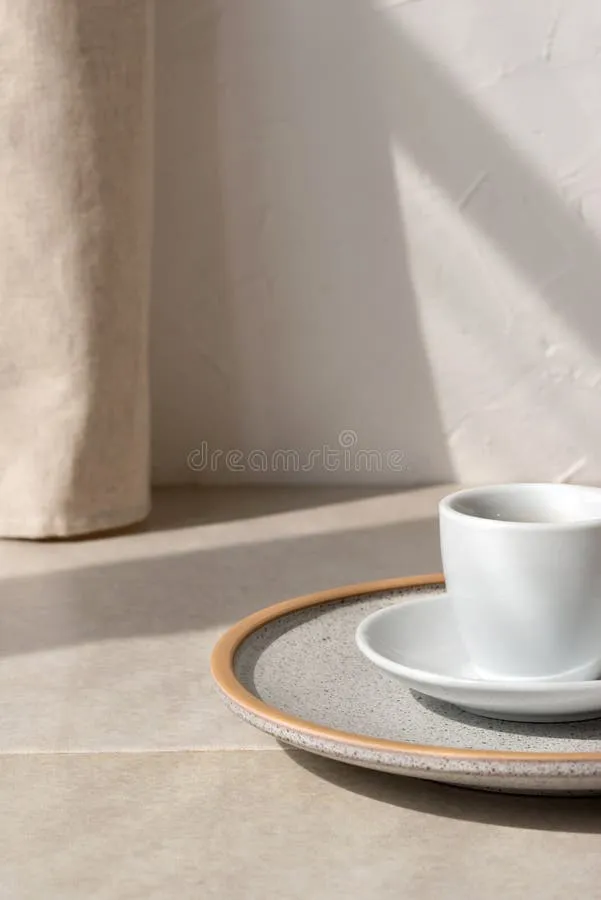
Photo: elegant minimalist breakfast table setting ceramic coffee cup morning light New York apartment, via thumbs.dreamstime.com
There is a particular kind of stillness that settles over a well-appointed New York apartment before the rest of the building stirs. The radiator ticks. The light off the Hudson arrives at an angle that flatters everything it touches. And at the table — a small, deliberate table, perhaps a marble-topped piece from a Brooklyn dealer or an heirloom carried up four flights of stairs — someone is doing something that has become quietly radical in the most productive city in the world.
They are taking their time.
The Table as a Design Statement
For a growing number of New Yorkers, the breakfast table has become as considered a space as any curated shelf or gallery wall. The objects assembled there — a ceramic pour-over brewer, a linen napkin in a muted earth tone, a small ceramic dish holding a single pat of cultured butter — are not accidental. They are chosen. They reflect a philosophy that has been percolating through the city's design-forward households for several years now: that the quality of a morning shapes the quality of everything that follows.
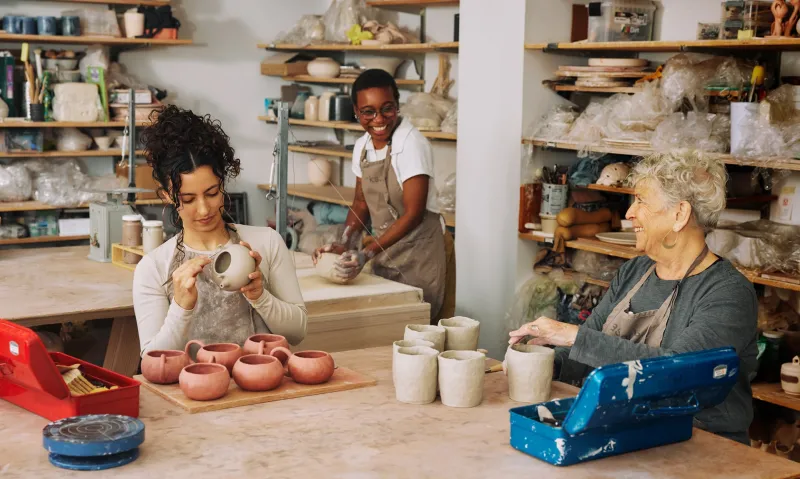
"The table tells you something about how a person thinks," says Nadia Osei, a Brooklyn-based ceramicist whose hand-thrown stoneware pieces have found their way into some of the city's most thoughtful kitchens. "When someone uses a piece I've made to hold their salt or their honey each morning, that object becomes part of a ritual. It stops being décor and starts being functional in the most intimate sense."
Osei's work — matte-glazed, slightly irregular in the way that only handmade things can be — represents a broader shift in how New Yorkers are sourcing their domestic objects. The mass-produced, the uniform, and the disposable have lost their appeal among a particular stratum of city dwellers who have come to regard their homes, and specifically their kitchens, as extensions of a larger value system.
Slow Sourcing in a Fast City
The sourcing practices behind these morning tables are, in many cases, as deliberate as the tables themselves. Small-batch producers have found an eager and loyal audience in New York, where farmers' markets in Union Square, Fort Greene, and the Upper West Side have long served as weekend theaters of discernment. But the commitment has deepened. Increasingly, the same care applied to selecting a piece of furniture is being applied to selecting a jar of honey or a bag of single-origin coffee.
Marco Reyes, who runs a small-batch grain and milling operation out of the Hudson Valley and sells through several Manhattan specialty retailers, has watched his customer base shift meaningfully over the past few years. "It used to be that people bought the fancy flour as a treat," he says. "Now I have customers who tell me that making their bread or their porridge with something that was grown and milled with intention is part of how they start their day with integrity. That's a different relationship with food."
This is the language of the slow living movement, which has taken particular root in New York precisely because the city makes slowness so difficult. The resistance is, in part, the point. Choosing to grind your own coffee, to set a proper table on a Tuesday, to eat from a bowl that someone made with their hands — these are acts of mild defiance against a culture that prizes velocity above almost everything else.
The Objects That Earn Their Place
What distinguishes the New York approach to mindful morning ritual from its more pastoral counterparts — the Catskills farmhouse aesthetic, the Vermont homesteader fantasy — is its urban pragmatism. Space is not abundant here. Every object must justify its presence. The cutting board that doubles as a serving board. The French press that is also the most beautiful thing on the counter. The single good knife that does everything.
This constraint, familiar to anyone who has navigated a Manhattan kitchen the size of a generous closet, has produced a particular kind of connoisseurship. New Yorkers who invest in their morning ritual tend to invest deeply in very few things. The result is a table that is spare, functional, and quietly beautiful — a set of objects that have each earned their place through daily use.
"I have four mugs," says Lena Hartwell, a graphic designer based in the West Village. "I got rid of everything else. Two are from a ceramicist I found at a market in Greenpoint, one belonged to my grandmother, and one I bought in Kyoto. Every morning I choose which one I want to drink from, and that small choice feels like the beginning of paying attention."
Hartwell's description of that small choice — and the attentiveness it inaugurates — points to something that lifestyle researchers and behavioral psychologists have been examining with increasing interest: the way that morning rituals function as anchoring practices, establishing a tone of intentionality that persists through the day.
Why the Morning Table Matters Now
The timing of this cultural moment is not coincidental. After several years of collective disruption — in work patterns, in domestic life, in the basic architecture of the daily routine — many New Yorkers have emerged with a recalibrated sense of what deserves their attention. The home, once a place you left, became a place you inhabited fully. The kitchen, once a utilitarian corridor between sleep and the subway, became a room with meaning.
The breakfast table, in this context, is not a trend. It is a response. It is what happens when people who have always moved quickly decide, deliberately, to move slowly — at least for the first hour.
At Bird & Branch, we have long believed that the objects we live with shape the lives we lead. The morning table is perhaps the most honest expression of that conviction: a small, daily argument for beauty, craft, and presence in a city that never stops asking you to hurry.