Blocks Apart, Worlds Away: How New York's Neighborhoods Are Writing America's Design Future
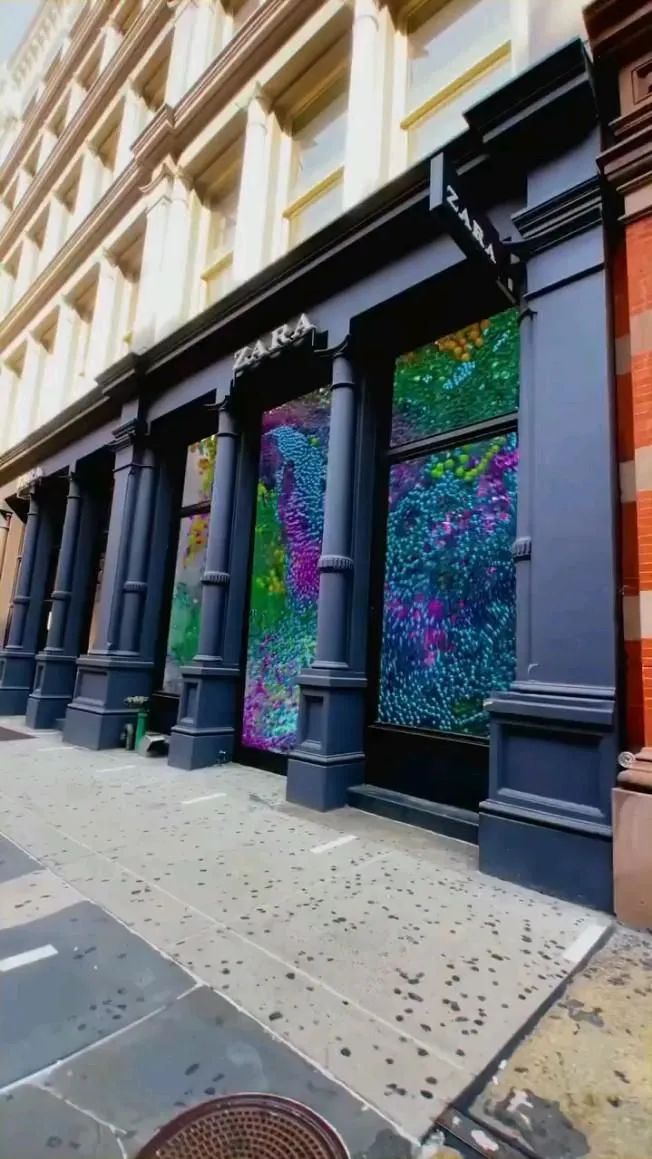
Photo: New York neighborhood street style boutique window display urban design, via i.pinimg.com
To walk across New York is to move through a series of distinct aesthetic universes, each one coherent, each one quietly insistent on its own terms. The visual logic of a Carroll Gardens brownstone has almost nothing in common with the deliberate rawness of a Bushwick studio apartment. The restrained luxury of a West Village townhouse speaks an entirely different design language than the layered eclecticism of a Jackson Heights living room. Yet all of these vocabularies belong to the same city—and increasingly, they belong to the rest of America as well.
What New York exports is not a single style but a set of attitudes: toward space, toward accumulation, toward the relationship between where you live and who you are. Those attitudes, shaped in the particular pressure of urban density and cultural collision, have been spreading steadily outward—carried by designers, tastemakers, boutique owners, and the simple fact that the internet has made every neighborhood simultaneously local and universal.
Williamsburg: The Grammar of Considered Restraint
Few neighborhoods have had as outsized an influence on American interior and fashion sensibility as Williamsburg, Brooklyn. What began as an artist enclave defined by necessity—exposed brick because renovation was unaffordable, vintage furniture because it was all that fit the budget—has evolved into something far more intentional: a full aesthetic philosophy built around the beauty of unfinished things.
The Williamsburg sensibility, as it has matured, is not actually about austerity. It is about authenticity of material. Raw wood, aged metal, natural linen, ceramics with visible hand-marks—these are the signatures of a design language that values process as much as product. It is an aesthetic that distrusts polish and finds beauty in the evidence of making.
This vocabulary has traveled far. Walk through a design-forward home goods store in Austin, Portland, or Denver and you will find its fingerprints everywhere: the matte-glazed mugs, the unbleached cotton throws, the open shelving that treats everyday objects as worthy of display. What was once a Brooklyn conversation has become a national design vernacular.
Several independent boutiques along Bedford and Grand Avenues—small, carefully edited shops that carry the work of local ceramicists, textile artists, and furniture makers—have been instrumental in formalizing this language, giving it a commercial shape that could be understood and replicated beyond the neighborhood's borders.
The Upper West Side: Permanence as a Design Value
If Williamsburg speaks in textures and imperfection, the Upper West Side speaks in longevity. The neighborhood's dominant aesthetic—warm, layered, built around antiques and heirlooms alongside thoughtfully chosen contemporary pieces—reflects a design philosophy rooted in the idea that a well-furnished room should take decades to assemble.
This is not the maximalism of accumulation. It is the richness of selection over time. An Upper West Side living room might contain a mid-century sofa, a nineteenth-century secretary desk, a contemporary painting, and a lamp purchased thirty years ago from a shop that no longer exists. The coherence comes not from matching but from the consistent quality of individual judgment applied across years.
This approach to interior life—patient, layered, deeply personal—has found a receptive audience among Americans who have grown weary of the rapid turnover of trend-driven home décor. There is a growing appetite for rooms that look lived-in rather than staged, for furniture that carries history rather than broadcasting newness. The Upper West Side has always known how to do this, and the rest of the country is beginning to take notes.
The Lower East Side: Eclecticism as Aesthetic Argument
The Lower East Side has historically been one of New York's most dynamic cultural laboratories, and its design sensibility reflects that history: layered, irreverent, deliberately resistant to any single organizing principle. Here, the aesthetic argument is not for restraint or permanence but for the vitality of combination—the idea that beauty emerges from unexpected juxtaposition rather than careful coordination.
In fashion, this translates to a willingness to mix periods, price points, and references in ways that feel instinctive rather than calculated. A vintage denim jacket worn over a silk slip dress. A graphic tee tucked into a tailored trouser. The Lower East Side dresses as if the entire history of clothing is available simultaneously, and the skill lies in the edit—in knowing which combinations generate genuine tension and which simply generate noise.
In home design, the same logic applies. The neighborhood's artists and small-business owners have long inhabited spaces that function as both living quarters and creative studios, and this blurring of categories has produced interiors that feel genuinely alive: walls dense with art, shelves that mix books with objects with tools, surfaces that record the ongoing activity of a creative life.
This aesthetic has been particularly influential among younger American consumers who are pushing back against the sterile perfection of social media–driven interiors. The Lower East Side offers a permission structure: rooms are allowed to be complicated, wardrobes are allowed to be contradictory, and beauty does not require resolution.
A City That Teaches by Example
What makes New York's neighborhood aesthetics so potent as cultural exports is that they are not manufactured by marketing departments or trend forecasters. They emerge organically from the specific conditions of each place—the architecture, the economic history, the particular mix of people who chose to live there and the reasons they did.
This authenticity is what gives them staying power. Trends fade. Aesthetics with genuine roots do not.
At Bird & Branch NYC, this is the understanding that animates everything we curate: that style and design, at their most meaningful, are always connected to place. The neighborhoods of New York are not simply backdrops—they are active participants in the ongoing American conversation about how we want to live, what we want to surround ourselves with, and what we believe beauty is for.
The rest of the country is listening. And the city, as it always has, is speaking in many voices at once.