Pre-Owned, Deeply Considered: New York's Vintage and Resale Culture Redefines What Luxury Means
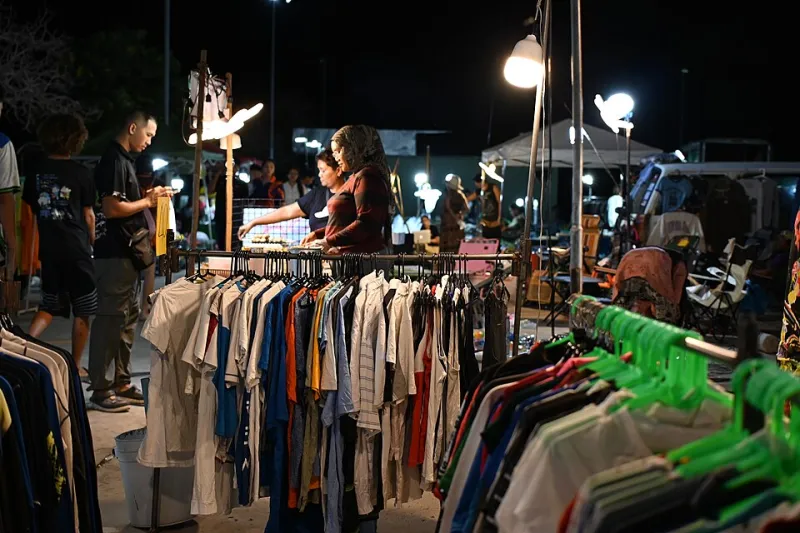
Photo: PattayaPatrol, CC BY-SA 4.0, via Wikimedia Commons
On a Saturday morning in late autumn, the stalls of the Hell's Kitchen Flea Market fill slowly with the particular kind of shopper who arrives with purpose rather than whim. They carry tote bags instead of shopping baskets. They handle objects carefully, turning them over, reading labels, examining seams. They are not hunting for bargains, exactly. They are hunting for stories.
This is the texture of New York's vintage and resale culture at its most elemental: a practice grounded not in thrift but in discernment. The city has always had its flea markets and consignment shops, its estate sale devotees and its sample sale loyalists. But something has shifted in recent years, both in the scale of the resale economy and in the cultural significance attached to it. What was once a subculture has become, unmistakably, a mainstream phenomenon—and New York remains its most vivid expression.
The Geography of the Pre-Owned
New York's resale landscape is genuinely plural. It encompasses the well-appointed consignment boutiques of the Upper East Side, where designer pieces cycle quietly between wardrobes with minimal fanfare, and the densely packed vintage stores of Bushwick and Ridgewood, where the inventory spans decades and the atmosphere rewards patience. It includes the curated racks of shops in Nolita and the East Village, where owners with trained eyes select for coherence and aesthetic—offering edited collections rather than volume.
Then there are the digital layers. Platforms like The RealReal, Vestiaire Collective, and Depop have introduced new infrastructure to a market that once operated almost entirely on local knowledge and foot traffic. New York sellers and buyers are among the most active users on all three platforms, and the city's density of high-quality pre-owned goods—the natural byproduct of a concentrated, fashion-conscious population with limited storage—means that the supply is consistently exceptional.
What unites these disparate channels is a shared understanding: that a garment or object's history does not diminish its value. In many cases, it amplifies it.
Younger New Yorkers and the Redefinition of Luxury
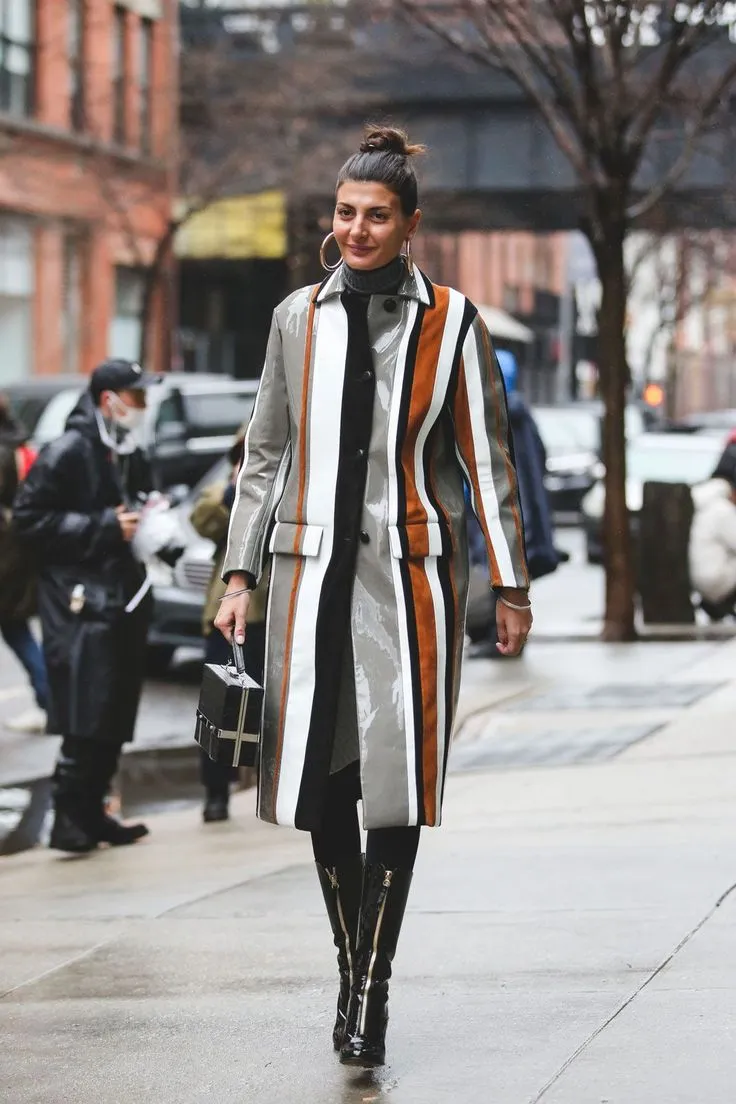
For the generation that came of age during the 2010s, the relationship between luxury and newness has been fundamentally renegotiated. A twenty-six-year-old in Greenpoint who wears a 1990s Helmut Lang jacket found at a consignment shop in Park Slope is not compromising on luxury. She is, by her own reckoning and the reckoning of her peers, expressing it more authentically than she would by purchasing a new piece from a contemporary fast-fashion brand.
This reorientation is partly ethical—a response to widely documented concerns about the environmental costs of textile production—and partly aesthetic. Vintage clothing carries the evidence of its own making in ways that contemporary mass production rarely does. The weight of a well-constructed wool blazer from the 1970s, the particular hand of a silk blouse cut before fabrics were routinely blended with synthetics, the hardware on a leather bag made when hardware was still solid—these qualities are not merely nostalgic. They are material arguments for a different standard of making.
"There's a reason people are drawn to older things," observes the owner of a small vintage shop in Crown Heights who has been curating inventory for nearly a decade. "It's not just the look. It's that you can feel the difference. The construction is different. The fabric is different. You're holding evidence of someone caring about what they made."
The Sustainability Argument, Honestly Considered
The environmental case for resale is well established and worth stating plainly. The fashion industry is among the most resource-intensive on earth, responsible for significant volumes of water consumption, chemical use, and carbon emissions at every stage of production. Extending the useful life of a garment through resale—rather than allowing it to enter the waste stream after a single owner—reduces the demand signal for new production and keeps existing materials in circulation.
New York's resale culture has embraced this argument, though the most compelling participants are careful not to let sustainability become the sole justification for their choices. The vintage enthusiast who is drawn primarily by ethics but indifferent to aesthetics tends to make different—and often less satisfying—selections than the one who is drawn by both. The intersection of the ethical and the beautiful is where New York's resale culture does its most interesting work.
Several newer platforms have attempted to make this intersection more accessible. Services offering authenticated pre-owned luxury goods with detailed condition reports and provenance documentation are addressing the trust gap that has historically made some consumers hesitant about resale. The result is a market that increasingly resembles the primary luxury market in its presentation and expectations—but with the added dimension of history.
What Objects Carry
There is a concept in material culture studies sometimes called the "biography of objects"—the idea that things accumulate meaning through use, ownership, and time. A coat that belonged to a grandmother, a lamp purchased at an estate sale in Connecticut, a set of dishes discovered in a shop in Carroll Gardens: each carries something beyond its physical properties. The biography of an object, when it can be traced or even imagined, deepens the relationship between the thing and its new owner.
New York's resale culture is, at its most thoughtful, a culture of object biographies. The pleasure of a vintage find is not simply the pleasure of a good deal or even of a beautiful thing. It is the pleasure of continuity—of becoming, briefly and materially, part of a longer story.
This is why the question "Where did you find that?" carries such particular weight in New York social circles. The answer is never merely a location. It is a small narrative: a Saturday morning, a particular stall, a moment of recognition. The finding is part of the meaning.
A Market With Staying Power
The numbers support what the culture already knows. The US resale market is projected to reach significant scale in the coming years, with growth rates consistently outpacing the broader retail sector. New York, as both a generator of high-quality pre-owned inventory and a market with sophisticated buyers, sits at the center of this expansion.
For the city's boutiques and independent shops, the implications are both practical and philosophical. The most thoughtful retailers are increasingly thinking about their role not as sellers of new goods alone but as stewards of a longer material cycle—sourcing, editing, presenting, and passing along objects with care for their continued life.
This stewardship model aligns naturally with the values that have always animated New York's best retail culture: the conviction that what you offer should be worth offering, and that the person on the other side of the transaction deserves the same discernment you would apply to your own home.
In that sense, the vintage and resale movement is not a departure from the city's retail tradition. It is, perhaps, its most honest continuation.