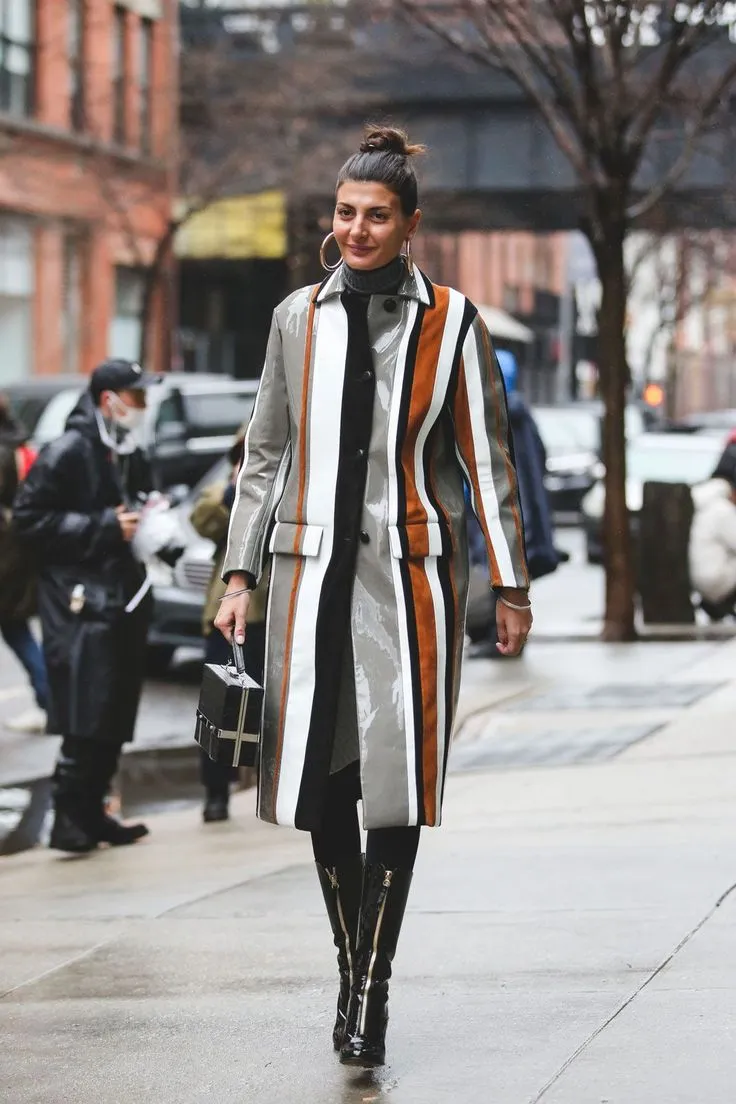
Fewer, Finer, Forever: The Discipline Behind New York's Most Intentional Wardrobes

Photo: minimalist New York wardrobe curated clothing rack neutral tones, via thumbs.dreamstime.com
There is a particular kind of confidence that moves through New York differently than ambition or wealth. It is quieter. It belongs to the person who arrives in a single well-cut coat, whose accessories number exactly two, whose closet—if you were ever invited to see it—would reveal perhaps forty pieces, each one deliberate, each one earned. This is not minimalism as aesthetic trend. This is editing as a practice, and in New York, it has become something close to a discipline.
The city's most discerning dressers have long understood something that the broader American consumer culture is only beginning to absorb: that the quality of what you own is inseparable from the quality of what you remove. To curate well, you must first be willing to eliminate ruthlessly.
The Framework Before the Purchase
Marcella Osei, a Brooklyn-based personal stylist whose client list spans architects, editors, and a handful of quietly prominent financiers, describes her process as one of interrogation rather than inspiration. "Most people shop from a place of desire," she says. "I teach clients to shop from a place of clarity. Before anything enters the wardrobe, we ask three questions: Does it serve a specific function that isn't already covered? Does it align with who this person actually is—not who they imagine themselves to be on a Tuesday afternoon? And will it matter in ten years?"
That third question, she notes, is the most clarifying. It removes the seduction of novelty almost entirely.
This framework—or variations of it—appears again and again among New York's style-forward community. It is not a rigid system so much as a shared orientation: a belief that the wardrobe should be a reflection of genuine identity rather than a record of impulse purchases and passing enthusiasms.
Julian Park, a menswear designer who operates a small atelier in the West Village, puts it more bluntly. "New York closets are small. That's not a disadvantage—it's a forcing function. You cannot keep everything. The city demands that you decide what matters."
Quality as a Living Standard, Not a Price Point
One of the more persistent misconceptions about the edited wardrobe is that it is simply an expensive one. In reality, the New Yorkers who practice this philosophy most rigorously are often its most economically diverse practitioners. What unites them is not a budget but a standard—and that standard is applied consistently, regardless of what something costs.
Quality, in this context, means longevity of construction, integrity of material, and—critically—personal resonance. A garment that is beautifully made but emotionally inert fails the edit just as surely as one that is cheaply manufactured. The question is never only "Is this well-made?" but also "Does this belong to me?"
Sophie Marin, a textile consultant and longtime resident of the Upper East Side, keeps what she calls a "provenance record" for every significant piece in her wardrobe. "I know where each thing came from, why I chose it, and what it replaced," she explains. "That accountability changes how you shop. You stop browsing and start seeking."
This shift—from browsing to seeking—is perhaps the most transformative element of the edited approach. It reframes shopping as an active, purposeful act rather than a passive response to availability and marketing.
The Ruthlessness of the Remove
For many people, the harder half of the equation is not acquiring with intention but releasing without guilt. New York's professional stylists report that this is where most clients struggle most acutely.
"People hold onto things because of what they paid, or because of who gave it to them, or because they believe they might become the person who would wear it someday," says Osei. "But a closet full of aspirational strangers is not a wardrobe. It's a storage problem."
The remove, she insists, must be as deliberate as the acquisition. Pieces that no longer serve—whether because of fit, evolution of taste, or a simple failure to reach for them—should exit cleanly. Donation, resale, and gifting are all honorable outcomes. What matters is that the departure is conscious.
Park describes a seasonal editing ritual he has observed among his most stylish clients: a twice-yearly audit in which every item is physically handled, tried on if necessary, and evaluated against the current shape of the wearer's life. "You are not the same person you were six months ago," he says. "Your wardrobe should reflect that."
Building Toward a Signature
The end goal of rigorous editing is not emptiness—it is signature. The New Yorkers who practice this most successfully tend to develop what observers describe as an immediately recognizable personal aesthetic: a visual grammar that communicates something true about them before they have spoken a word.
This is, at its core, what Bird & Branch NYC has always understood about curated living. The objects and garments we choose—and, equally, those we decline—compose a kind of autobiography. In a city as densely expressive as New York, that autobiography must be both honest and intentional.
Marin, whose own wardrobe is built around a palette of slate, ivory, and deep forest green, describes the moment she recognized her signature as one of genuine relief. "I stopped making decisions," she says. "Or rather, the decisions became very easy. Everything either belonged or it didn't. That clarity is worth more than any individual piece I own."
The edited wardrobe, then, is not a sacrifice. It is an inheritance—one you build deliberately, tend carefully, and carry forward with the particular ease of someone who has already done the difficult work of deciding who they are.