The Curated Life: How New York's 'Less Is More' Philosophy Is Changing the Way America Consumes
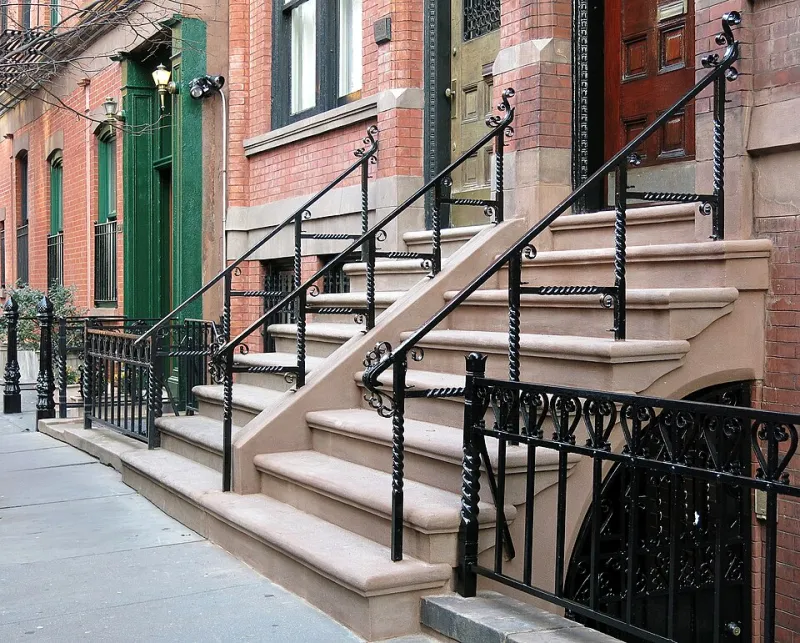
Photo: Spencer Means from New York City, USA, CC BY-SA 2.0, via Wikimedia Commons
There is a particular kind of discipline that New York City demands of its residents. It is not the discipline of ambition or industry, though the city asks for those as well. It is something quieter, more intimate: the discipline of choosing. When your living room doubles as your office, your dining room, and your sanctuary, every object within it carries weight. Nothing survives simply by default. Everything must be wanted.
This necessity—born of tight hallways, shallow closets, and the relentless arithmetic of urban real estate—has given rise to one of the most compelling consumer philosophies in contemporary American life. New Yorkers, by circumstance and eventually by conviction, have become masters of the edited existence.
The Constraint That Became a Creed
It would be tempting to frame this as a story about limitation. But spend time in the well-appointed apartments of the West Village, the spare and considered lofts of Dumbo, or the thoughtfully arranged studios of Astoria, and what you encounter is not deprivation. It is intention.
The average New York City apartment offers roughly 740 square feet of living space—less than half the national average for a single-family home. Yet within those dimensions, residents consistently create environments of striking visual coherence and personal meaning. The mechanism behind this transformation is curation: the active, ongoing process of deciding what belongs and what does not.
"Space teaches you to be honest," says one longtime Brooklyn resident who has furnished her one-bedroom apartment almost entirely with pieces acquired over two decades of deliberate searching. "You stop buying things because they're on sale or because you might need them someday. You only bring something home if you genuinely love it."
This orientation—prioritizing depth of attachment over breadth of ownership—is the foundation of what design culture has come to call the 'less but better' mentality.
From Closets to Collections
The philosophy extends well beyond fashion, though clothing remains its most visible expression. In New York, the capsule wardrobe is not a trend so much as a practical response to the reality of a closet that measures eighteen inches across. Residents learn early that ten exceptional garments outperform thirty mediocre ones, not merely aesthetically but functionally. A beautifully cut wool coat worn across fifteen winters represents both better value and a more coherent personal style than a rotation of fast-fashion alternatives cycled out each season.
But the same logic applies with equal force to home décor, art, and everyday objects. New Yorkers who collect art, for instance, tend to acquire with unusual seriousness. A single framed work by an emerging artist discovered at a Lower East Side gallery opening will be studied, considered, and placed with care. It will mean something. The alternative—filling walls with decorative filler simply to cover space—is, in the city's aesthetic vocabulary, a kind of failure.
The same discernment governs kitchen equipment, tableware, books, and even the small objects that populate a windowsill or a bedside table. In a space-constrained environment, the decorative and the functional must justify themselves simultaneously. A ceramic bowl that is both beautiful and useful earns its place. One that is merely adequate does not.
Quality as the New Currency
What emerges from this culture of considered acquisition is a recalibrated sense of value. For many New Yorkers, the relevant question is no longer "How much does this cost?" but rather "How much is this worth to me, and for how long?" These are meaningfully different inquiries.
The shift has practical consequences. Residents who have internalized the edited approach tend to spend more per item and own fewer items overall. They gravitate toward materials that age well—solid wood, natural fiber, hand-thrown ceramic, full-grain leather—over synthetics that degrade quickly and require replacement. They are drawn to makers and brands whose production values align with their own standards, and they are willing to wait for the right piece rather than settle for an available one.
This patience, perhaps more than any other quality, distinguishes the curated life from mere minimalism. Minimalism, in its purest form, can become its own kind of performance—a visual aesthetic imposed on life rather than emerging from it. The New York approach is less concerned with the appearance of restraint than with the reality of it. The goal is not an empty room. It is a full one, populated only by things that earn their presence.
A Philosophy That Travels
What is remarkable about this sensibility is how readily it translates beyond the city's borders. As remote work has dispersed New York's creative class across the country, and as social media has made the interiors of well-curated apartments visible to audiences in Cleveland and Charlotte and Denver, the philosophy has found new adherents in places where space is abundant but the appeal of intentionality remains.
Retailers across the country have taken notice. The success of boutique home goods stores, the sustained growth of direct-to-consumer brands built around single exceptional products, and the rising consumer appetite for provenance and craft all reflect the spread of a sensibility that New York helped codify.
The American consumer, long characterized by a preference for volume and variety, is quietly but perceptibly shifting. Not every household is ready to embrace the edited apartment in its most rigorous form. But the underlying question—does this object deserve a place in my life?—is one that more people are learning to ask.
The Branch and the Bird
There is a useful metaphor in the natural world for this way of living. A bird does not carry its environment with it. It selects a branch—the right one, in the right tree, at the right moment—and inhabits it fully. What it brings to that perch is not an accumulation of objects but a quality of presence.
The most compelling New York interiors, and the most compelling New York wardrobes, operate on this principle. They are not defined by what they contain so much as by the care with which each element was chosen. The result is spaces and wardrobes that feel, paradoxically, more generous than cluttered ones—more revealing of the person who inhabits them, more alive to the specific textures of a life actually being lived.
This is the promise of the curated existence: not less, exactly, but truer. And in a culture that has long confused abundance with richness, it is a distinction worth making.