What Remains: The New Yorkers Who Have Learned to Own Less and Mean More
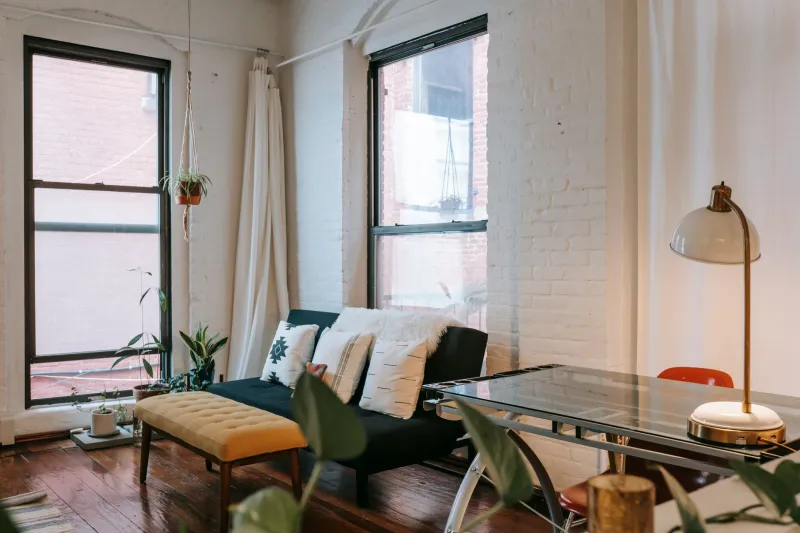
There is a particular kind of apartment you encounter in New York — not the maximalist shrine to acquisition, nor the aggressively spare space that announces its emptiness with pride. It is the apartment that feels, from the moment you enter it, like someone actually lives there. Not lives there in the sense of occupying square footage, but lives there in the sense of having made deliberate choices about what deserves to share their days.
These homes tell stories. Not the curated narratives of a showroom, but the kind of story that accumulates over time, one object at a time, each piece chosen because it holds weight — emotional, philosophical, or simply personal — that no replacement could replicate.
This is the interior life of the intentional collector. And in a city that has long celebrated more, it may be the most quietly radical position one can take.
The Weight of the Chosen Object
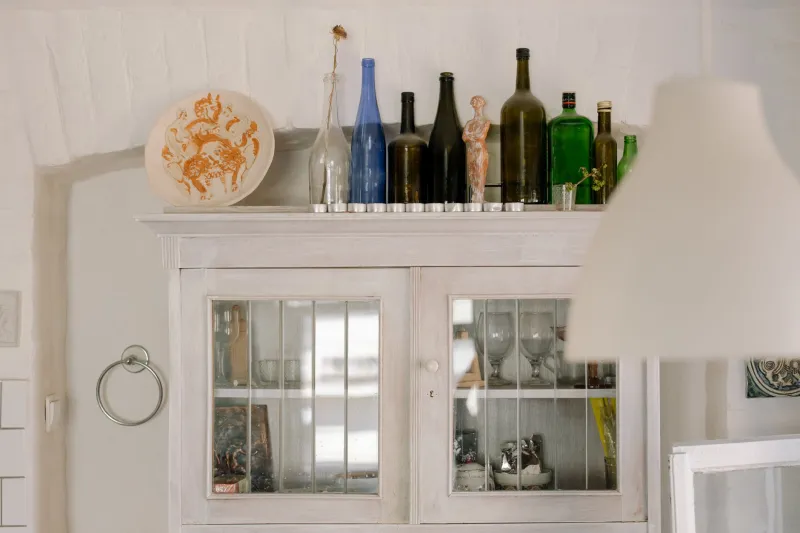
Miranda Foss, a textile designer based in Carroll Gardens, owns fewer than a dozen decorative objects. She can name each one, its origin, and the precise reason it earned a place in her home. A small ceramic bowl from a potter she met at a craft fair in the Hudson Valley. A framed lithograph she purchased during a particularly difficult year, chosen because it reminded her that beauty persists. A wooden letter opener inherited from a grandfather she barely knew but has spent decades trying to understand.
"I used to think collecting was about building something complete," she says, running her fingers along the edge of the bowl. "But completeness is a trap. You're always one thing away from finished, which means you're never finished. What I wanted was depth, not breadth."
Foss's approach reflects a growing philosophy among New Yorkers who have grown weary of the accumulation cycle. The objects they choose are not trophies of taste or evidence of cultural fluency. They are, in the truest sense, anchors — things that hold a person in place when the city's relentless velocity threatens to carry them somewhere they didn't intend to go.
Collecting as Self-Knowledge
Daniel Osei, an architect who splits his time between a studio in Greenpoint and a teaching position at a downtown design school, describes the process of intentional collecting as a form of ongoing self-examination. "Every object you bring into your space is a small decision about who you are," he explains. "Most people make those decisions unconsciously. They buy because something is on sale, or because a friend has one, or because the algorithm suggested it. The objects pile up and none of them are really speaking to each other."
For Osei, cohesion is the operative word. His own collection — a mix of West African textiles, a handful of architectural models, and a single extraordinary hand-thrown vase — does not match in any conventional decorating sense. But it coheres. It tells a story about a man who thinks in structures, who honors his heritage, who finds beauty in the space between function and form.
"When I look at my shelves, I see myself," he says simply. "That's not vanity. That's clarity."
The distinction matters. Vanity collects for the gaze of others. Clarity collects for the gaze turned inward.
The Discipline of the Empty Shelf
For many intentional collectors, the hardest practice is not choosing what to keep but resisting what to add. The New York retail landscape is, by design, an engine of desire. Boutiques, weekend markets, curated pop-ups, and the endless scroll of online discovery create a near-constant state of wanting. To pause before that wanting — to ask not whether something is beautiful but whether it belongs — requires a discipline that most of us are never taught.
Claire Nakamura, who runs a small gallery in the West Village devoted to emerging ceramicists, has developed what she calls a "waiting practice." When she encounters an object she wants to own, she photographs it and waits thirty days. If, at the end of that month, she still feels that the piece has something to say to her specifically — not just that it is lovely, not just that it would look well in a particular corner — she returns for it.
"Most things don't pass the test," she admits. "Not because they aren't wonderful. They often are. But wonderful isn't enough. I need to feel that an object has a conversation to have with me, and that I have one to have with it."
This language of conversation — of objects speaking and being spoken to — recurs throughout discussions with intentional collectors. It points to something important about how meaning is made in a home. Objects do not arrive with significance pre-installed. Significance is constructed through attention, through memory, through the daily act of living alongside something and allowing it to accumulate meaning the way a garment accumulates wear.
The Coherent Home as Personal Philosophy
There is something almost literary about the homes of those who collect with intention. Each object functions less like a decoration and more like a sentence — necessary, considered, contributing to a larger meaning that could not exist without it. Remove any one piece and the narrative shifts. Add something careless and the whole thing loses its voice.
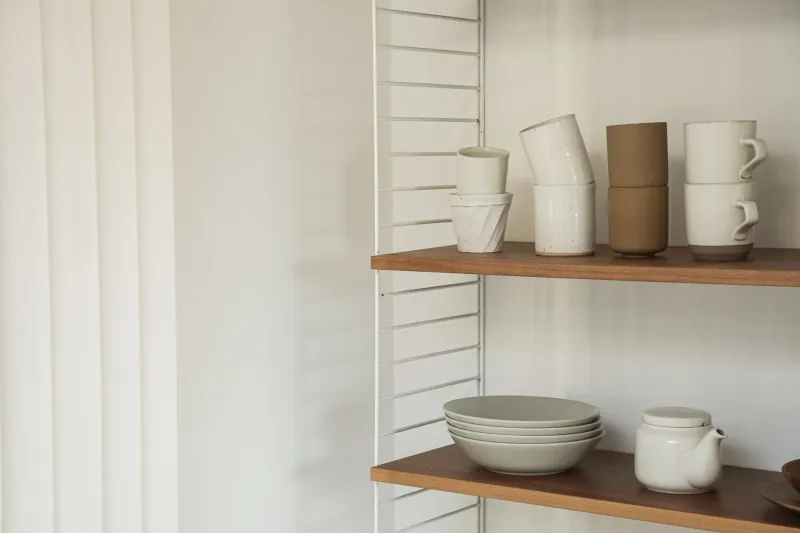
This is not minimalism in the austere, photogenic sense that has dominated design conversations for the past decade. The intentional collector is not interested in emptiness as an aesthetic. She is interested in fullness — the fullness of a life in which every object has earned its place, where nothing is present by accident, and where the home itself becomes a kind of autobiography that its inhabitant can read every morning.
Foss puts it best. Standing in her living room, surrounded by her twelve objects, each one radiating the particular warmth of something deeply known, she says: "A home should tell you something true about yourself. Not who you want people to think you are. Who you actually are. When I got clear about the difference, everything changed."
In a city that rarely stops moving, that clarity — hard-won, quietly radical, and entirely one's own — may be the most valuable thing any of us can collect.