One Season at a Time: The New Yorkers Who Have Turned Curation Into a Living Practice
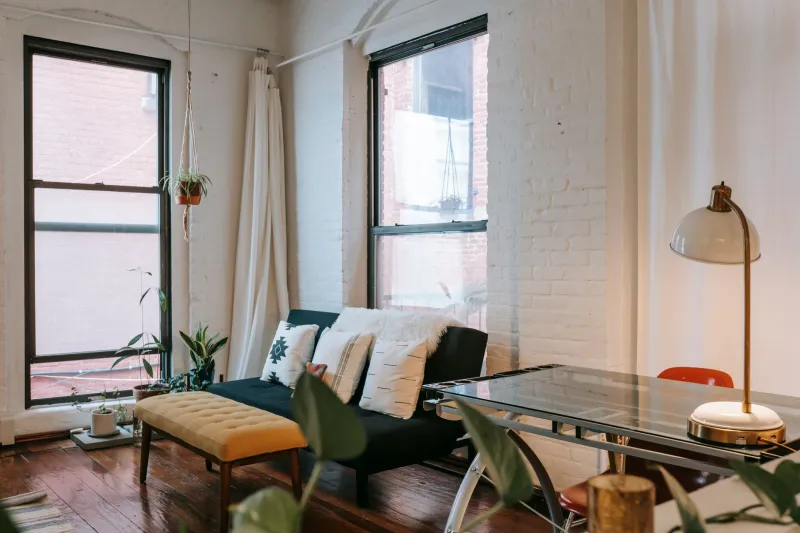
There is a particular kind of stillness that settles over a well-edited room. It is not the stillness of emptiness, nor the careful staging of a showroom. It is something earned — the quiet that accumulates when every object present has been chosen not once, but repeatedly, surviving each seasonal reckoning with its place intact. In New York, where the instinct to acquire is reinforced at nearly every corner, this discipline is increasingly rare. And perhaps for that reason, it has become all the more sought after.
A growing number of the city's most thoughtful residents — interior designers, collectors, independent shop owners, and those who simply take their surroundings seriously — have adopted what some are calling the slow edit: a practice of returning to their spaces and wardrobes at each seasonal turn, not to add, but to reassess. To ask, with genuine curiosity, what belongs here now.
The Rhythm of Reassessment
For Margaux Delacroix, a textile designer based in Carroll Gardens, Brooklyn, the practice began almost accidentally. "I had a habit of buying beautiful things and then losing them," she says, seated in a living room where every surface seems to have been placed with quiet intention. "Not physically — they were all still there — but I'd stopped seeing them. The apartment had become a kind of visual noise."
Her solution was structural. Each season — she marks the transitions at the equinoxes and solstices rather than by retail calendar — she takes a full weekend to move through her home with fresh eyes. Some objects are rotated to storage. Others are passed along to friends or donated. A few are promoted: moved from a back shelf to a place of prominence, finally given the attention they deserve.
"What surprised me," she notes, "was how much more I loved what remained. Editing made me appreciate things I'd nearly stopped noticing."
This is, at its core, what the slow edit offers: not deprivation, but depth. The practice resists the logic of constant acquisition — the idea that a home is improved primarily by addition — and replaces it with something more nuanced. Curation, in this framework, is ongoing. A home is never finished. It is always in conversation with the person living inside it.
Objects That Earn Their Place
The slow edit has particular resonance in New York, where square footage is precious and the temptation to fill it is constant. Retail culture, social media, and the sheer density of beautiful things available in this city conspire to make accumulation feel like cultivation. The slow edit asks a harder question: does this object still belong?
Jonathan Reyes, an architect and furniture collector who divides his time between the West Village and the Hudson Valley, describes his approach in terms that echo the principles of his professional life. "Good architecture is about what you leave out," he says. "The same is true of a home. The pieces I return to every season are the ones that hold up under that kind of scrutiny. They have a quality that doesn't diminish with familiarity — it deepens."
For Reyes, the seasonal review is also an opportunity to notice how his own relationship to objects has changed. A ceramic vessel that felt essential two years ago may now feel like a placeholder for something not yet found. A chair acquired at a flea market in Red Hook, initially underestimated, has become the most important piece in his study. "Curation isn't a single decision," he says. "It's a series of conversations over time."
The Wardrobe as Extension
The slow edit does not confine itself to interior spaces. Many practitioners apply the same seasonal logic to their wardrobes, treating clothing not as a rotating inventory but as a curated collection that evolves in dialogue with who they are becoming.
Isabelle Fontaine, a stylist who works with private clients across the Upper East Side and Tribeca, has built her entire practice around this principle. "Most of my clients come to me overwhelmed," she explains. "They have closets full of clothes and nothing to wear. That's not a shopping problem — it's a curation problem."
Her process involves working through a wardrobe at each seasonal shift, asking not only what fits and what flatters, but what still reflects the person wearing it. "Your wardrobe should be a portrait," she says. "And like any portrait, it needs to be updated as the subject changes."
The pieces that survive multiple edits, she notes, tend to share certain qualities: exceptional construction, a restrained palette, a design that transcends seasonal trend. They are, in the truest sense, investments — not in the financial language of cost-per-wear, but in the deeper currency of identity and continuity.
The Patience Behind the Practice
What distinguishes the slow edit from ordinary decluttering is its relationship to time. This is not a one-time purge undertaken in a burst of resolution. It is a recurring practice, woven into the rhythm of the year, informed by how seasons alter light, mood, and the particular way a city feels against the skin.
In autumn, the city contracts. Rooms that felt spare in summer's open air become the primary landscape of daily life, and every object within them takes on greater weight. In spring, light returns and the eye grows critical — what felt cozy in December may feel cluttered by April. These shifts, for the slow edit practitioner, are not disruptions. They are invitations.
"New York teaches you to read your environment," says Delacroix. "The city is always changing. The light, the energy, the pace. If your home doesn't change with you, it starts to feel like a costume you've outgrown."
A Different Kind of Luxury
There is, in the end, a quiet luxury to this approach that no single acquisition can replicate. It is the luxury of knowing exactly what you own and why. Of walking into a room and feeling, with genuine certainty, that everything present belongs. Of opening a wardrobe and finding it coherent — a collection rather than a catalogue.
In a culture that equates abundance with richness, the slow edit proposes a different measure. The most refined spaces, it suggests, are not the most fully furnished. They are the most honestly edited — shaped by sustained attention, revised with each passing season, and never, quite, complete.
That incompleteness, it turns out, is not a flaw. It is the point. A home that is always in process is a home that remains alive — responsive to the person within it, open to what each new season might ask of both the space and its inhabitant.
The birds return. The branches shift. And the room, once again, is ready to be reconsidered.