The Moving Mind: How New York's Most Thoughtful Commuters Have Turned Transit Into Their Most Productive Hours
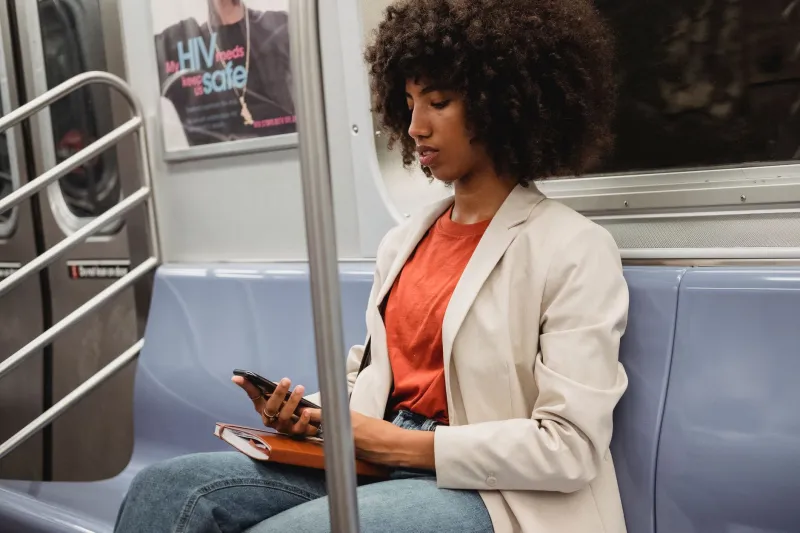
There is a particular quality of light on the A train just after rush hour begins to thin—a gray-gold glow that falls through the windows as the cars emerge briefly above ground near the Rockaways. Most passengers barely register it. But for a certain kind of New Yorker, that moment is the whole point.
They are not scrolling. They are not optimizing. They are simply present, notebook in hand or eyes resting on the middle distance, allowing the rhythm of the train to do something that no standing desk or productivity system ever quite manages: clear the mind entirely.
This is the slow commute—and it is becoming one of the most quietly radical practices in a city that has long mistaken velocity for virtue.
Against the Optimization Reflex
New York has always been a city that rewards speed. The cultural mythology here runs deep: the faster you move, the more seriously you are taken. Transit time, in this framework, has historically been understood as dead time—hours surrendered to infrastructure that might otherwise be reclaimed for emails, podcasts, or language-learning applications.
But something is shifting. Among the city's more deliberate residents—architects, editors, educators, designers, and independent makers of every description—there is a growing resistance to the idea that every unstructured minute must be converted into measurable output. The commute, they have discovered, is not an obstacle to the creative day. It is, in fact, its foundation.
The distinction matters. Productivity culture asks what you can accomplish during a thirty-minute subway ride. The slow commute asks something different entirely: what might you notice, feel, or understand if you simply allowed the ride to happen?
The Tactile Rituals of the Considered Traveler
The slow commute rarely begins on the platform. It begins at home, in the deliberate assembly of what one carries.
For many practitioners, the bag itself is a considered object—a leather tote worn soft from years of use, a canvas carryall from a Brooklyn maker, a structured satchel chosen not for its branding but for the way it distributes weight across the shoulder. Inside, the contents are similarly intentional: a physical book rather than a device, a small notebook of quality paper, perhaps a single pen that writes with enough resistance to slow the hand and, by extension, the mind.
These are not affectations. They are instruments of attention. The weight of a well-made notebook in the hand, the slight drag of a fountain pen across good paper—these sensations anchor the commuter in the physical present in a way that a touchscreen fundamentally cannot. The tactile, it turns out, is a portal to the contemplative.
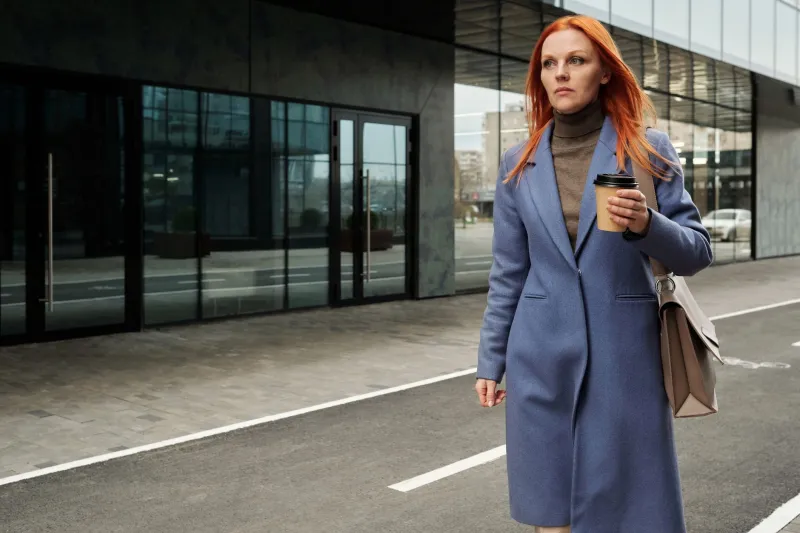
Some commuters extend this logic to their clothing. A coat with deep pockets. Shoes built for genuine walking rather than the performance of walking. Layers that can be adjusted without ceremony as the temperature shifts between underground and street. Dressing for the slow commute means dressing for the body in motion, which is a different calculus entirely from dressing to be seen standing still.
What the Walk Actually Does
Not everyone takes the train. A significant contingent of New York's slow commuters has abandoned underground transit altogether, at least on the days when time allows, in favor of the walk.
The walking commute is perhaps the oldest form of urban thinking on record. Philosophers have always walked. So have poets, architects, and anyone who has ever needed to work through a problem that refused to yield at a desk. There is something about the bilateral rhythm of footfall—left, right, left, right—that loosens the associative mind, allowing connections to form that direct concentration tends to suppress.
In New York, the walk offers additional texture. The city is a relentless source of visual and sensory information: the geometry of a fire escape against a pre-war facade, the particular smell of a bakery exhaust vent on a cold morning, the way sound behaves differently on a street lined with trees versus one flanked by glass towers. For the slow commuter, these details are not distractions. They are the material of creative thought.
Several neighborhoods lend themselves especially well to this practice. The West Village, with its irregular street grid and human-scaled architecture, rewards wandering. The path along the Hudson River Greenway offers the rare urban luxury of a long, uninterrupted sight line. Even the bridges—the Brooklyn, the Manhattan, the Williamsburg—provide a kind of transitional space, neither here nor there, that many commuters find unusually generative.
Reading as Resistance
Among the most visible markers of the slow commute is the physical book. In an era when the subway car has become a landscape of glowing rectangles, the person reading an actual volume stands apart—not, it should be said, as a statement of superiority, but as a quiet declaration of a different relationship with time.
Physical reading during transit is an act of sustained attention in an environment engineered for its fragmentation. The stops and starts of the train, the ambient noise of the car, the occasional jolt of an express passing a local station—all of these require the reader to re-enter the text repeatedly, to find the thread again and again. This is not a disadvantage. It is, for many, the practice itself: the repeated return to concentration, the small discipline of choosing depth over distraction.
The books carried tend to reflect the character of the commute. Long-form essays. Poetry collections thin enough to fit in a coat pocket. History, biography, and the kind of literary fiction that requires the reader to hold multiple timelines in mind simultaneously. These are not airport books. They are companions for a sustained interior journey.
Silence as a Form of Arrival
There is a version of the slow commute that involves doing almost nothing at all.
No book. No notebook. No podcast playing quietly through a single earbud. Just the ride—the sounds of the city moving around a still center, the visual rhythm of stations passing, the particular anonymity that the subway grants to everyone equally. For some commuters, this is the most valuable practice of all.
The city's pace can make genuine stillness feel irresponsible, even indulgent. But the slow commuter understands something that the optimization culture does not: the mind requires fallow periods. Creativity is not produced by constant input. It emerges from the spaces between inputs—the pauses, the silences, the moments when the conscious mind releases its grip and something less directed takes over.
The subway, of all places, can provide this. The train does not ask anything of you. It simply moves, and you move with it, and for twenty minutes or forty minutes or an hour, the city carries you without requiring your participation.
That, perhaps, is the deepest gift of the slow commute: the discovery that being carried, for once, is enough.