The Luxury of Knowing: How New York Women Over 50 Are Choosing Basics Over Baubles
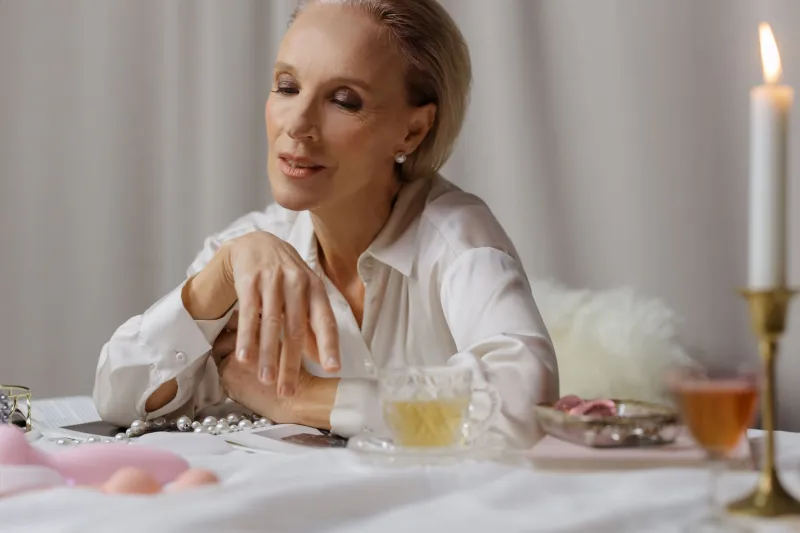
There is a particular kind of confidence that cannot be purchased at thirty. It arrives, if one is fortunate, somewhere around the fifth decade—quiet, unhurried, and deeply personal. In New York City, where fashion has long been treated as a competitive sport, a growing cohort of accomplished women over 50 is channeling that confidence into a form of luxury spending that looks, on the surface, almost unremarkable: a perfectly cut white shirt, a pair of tailored wool trousers, a cashmere pullover in a color that asks nothing of the room.
These are not consolation prizes for women who have aged out of trends. They are deliberate, considered investments made by women who have simply stopped apologizing for knowing what they want.
The Pivot That Stylists Have Been Watching
Among New York's private stylists, this shift has been building for several years, accelerating noticeably in the period following the pandemic, when so many women used prolonged stillness to interrogate the wardrobes they had accumulated. "I work with clients who spent years chasing the statement piece—the bag that everyone recognized, the dress from the runway," says one Manhattan-based stylist who counts executives, editors, and gallery owners among her clientele. "What I'm seeing now is a fundamental reorientation. They want the shirt that fits them perfectly. They want trousers that make them feel like themselves. The investment has moved inward."
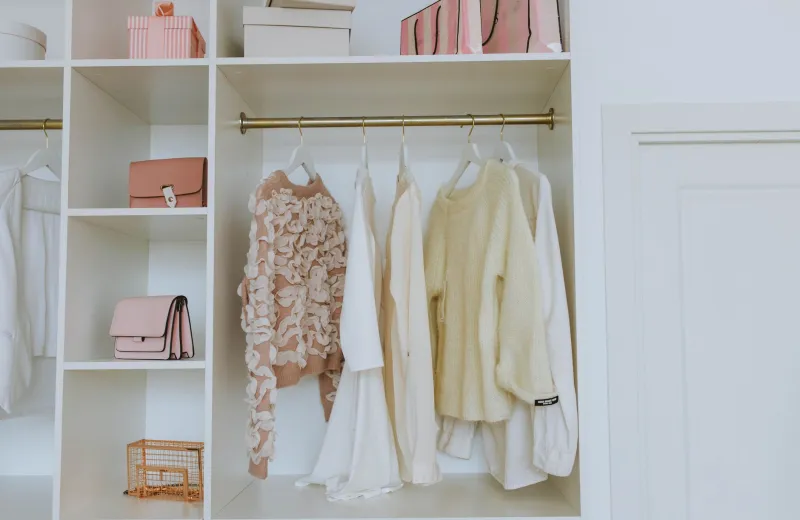
The numbers, anecdotally at least, support this observation. Luxury retailers on the Upper East Side and in SoHo report that their clientele over 50 is increasingly drawn to what buyers call "elevated essentials"—the category that encompasses premium white cotton shirts, fine-gauge merino and cashmere knitwear, impeccably constructed trousers in neutral weights, and leather goods that prioritize function and longevity over seasonal relevance. These are not inexpensive items. A single cashmere crewneck from a heritage Italian mill, or a white shirt cut in Swiss cotton with hand-stitched collar points, can command the same price as a trend-driven statement piece. The difference lies in the intention behind the purchase.
What a White Shirt Actually Costs
Consider the white shirt—perhaps the most deceptively demanding garment in any wardrobe. For decades, it was treated as a commodity: something to be replaced seasonally, bought in multiples, and never examined too closely. Among New York women who have arrived at a certain clarity about their own style, the white shirt has been elevated to an object worthy of serious contemplation.
"I own three white shirts," says a retired publishing executive who now consults for several arts nonprofits in the city. "Each one took me years to find. I know exactly how each one behaves—which one I wear when I want to feel authoritative, which one I reach for on weekends, which one travels. That knowledge, that precision, is the real luxury. I am not interested in buying a fourth."
This relationship with clothing—intimate, considered, almost curatorial—is what distinguishes the wardrobes of these women from those built around acquisition. The garments are fewer. The emotional weight attached to each is greater. And the satisfaction derived from wearing something that functions exactly as intended is, by every account, considerably more sustaining than the brief pleasure of novelty.
The Role of Tailoring and Fit
If there is a single investment that women in this demographic cite with the most conviction, it is tailoring. Not the purchase of bespoke clothing, necessarily, though that is not uncommon in certain circles. Rather, the practice of having existing garments—or newly acquired ones—altered to fit the body that one actually inhabits, rather than the body that a size label imagines.
"New York women over 50 have often spent thirty years dressing for who they were going to be," observes a tailor who operates a small atelier in the West Village, where her client list skews heavily toward women in their fifties and sixties. "At some point, something shifts. They start dressing for who they are. And that requires fit, not fashion."
The tailored trouser, in particular, has emerged as the garment of choice among this cohort—a piece that, when properly constructed and correctly altered, communicates authority without effort. Paired with one of those carefully selected white shirts, or layered beneath a fine cashmere knit, it forms the backbone of a wardrobe that requires almost no additional thought. The outfit is already solved. The woman wearing it is free to direct her attention elsewhere.
Cashmere as a Long-Term Commitment
Few materials have benefited more from this philosophical reorientation than cashmere. Once a category plagued by fast-fashion imitations and disposable knits that pilled after a single season, cashmere at the premium level—sourced from heritage mills in Scotland, Italy, or Mongolia, constructed with a fiber density that ensures genuine longevity—has become something of a touchstone for women who are purchasing with permanence in mind.
"I stopped buying cashmere that I didn't intend to own for at least a decade," says a physician who practices on the Upper West Side. "That changed everything about how I shop. The price point is different. The care is different. But so is the experience of wearing it. There's a quality of presence to a truly fine knit that cheaper versions simply don't replicate."
Luxury retailers who have observed this shift note that their customers in this demographic are asking more specific questions than younger buyers—inquiring about fiber grade, ply count, country of origin, and the brand's approach to garment care and repair. They are, in other words, approaching the purchase as an informed transaction rather than an emotional one.
The Freedom on the Other Side of Trend
Perhaps the most striking aspect of this movement is what it represents in terms of liberation. These are women who, in many cases, spent years navigating fashion as a form of social currency—dressing for industries, for relationships, for the projections of others. The arrival at a wardrobe built around elevated fundamentals is, for many of them, the first time they have dressed entirely for themselves.
"I used to spend enormous energy trying to look current," reflects a gallery director in Chelsea who has been refining her wardrobe for the past five years. "Now I spend that energy on fit, on quality, on whether something actually makes me feel like the person I've become. It's not a smaller ambition. It's a larger one."
At Bird & Branch NYC, this philosophy resonates deeply. The city has always rewarded those who understand the difference between fashion and style—between what is worn and what is inhabited. The women described here have arrived at something the most discerning New Yorkers have always known: that true luxury is not the accumulation of remarkable things, but the discipline to surround oneself only with the essential and the excellent.
The white shirt. The tailored trouser. The cashmere knit in exactly the right weight. These are not compromises. They are the point.