Mended with Intention: The New Yorkers Who Repair Instead of Replace
There is a wool coat—charcoal, double-breasted, purchased on a trip to Milan in 2011—that has accompanied its owner through more than a decade of New York winters. The lining frayed two years ago. The left cuff developed a small but insistent tear last season. And yet the coat remains, not despite these imperfections, but because of what it would take to address them: a visit to a master tailor in the Garment District, a conversation about thread weight and interfacing, a two-week wait, and the particular satisfaction of wearing something that has been deliberately preserved.
This is the quiet rebellion reshaping how a certain kind of New Yorker thinks about her wardrobe.
Beyond Sustainability: A Personal Philosophy
The conversation around slow fashion has, for years, been framed primarily in environmental terms—reduced waste, lower carbon footprints, conscious consumption. These arguments are not without merit. But among the women driving New York's repair movement, the motivation runs deeper than ecological concern. It is, at its core, a philosophical stance on value itself.
To repair a garment is to make a declaration: that this piece is worth the effort. That the relationship between a wearer and her clothing is not transactional, not disposable, and not subject to the relentless churn of seasonal trends. In a city that has long celebrated acquisition as a form of self-expression, choosing restoration over replacement carries its own particular weight.
For many, the shift began with a single meaningful piece—a grandmother's silk blouse, a leather bag carried through years of professional milestones, a cashmere sweater that fit, finally, exactly right. The emotional architecture of a wardrobe, it turns out, is not so easily replicated by something new.
The Artisans Behind the Seams
New York has always harbored extraordinary craft. What is changing is the visibility and esteem afforded to the tailors, cobblers, and restoration specialists who have quietly sustained the city's most considered wardrobes for generations.
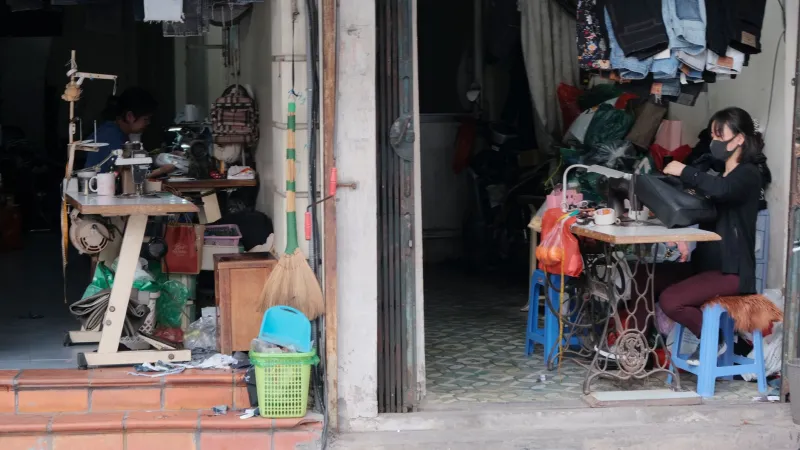
In the Garment District, fourth-generation tailors still work with the same precision their grandparents brought from Eastern Europe. In Brooklyn, a new wave of repair studios—some born from the pandemic's enforced stillness, when women finally confronted closets full of unworn, unloved, or broken pieces—has emerged with a different aesthetic sensibility. These spaces are clean, well-lit, and deliberately welcoming. They offer alterations alongside education, teaching clients to distinguish between a garment worth saving and one that has genuinely run its course.
Some of the most sought-after names in the city's repair world operate without websites, sustained entirely by word of mouth among women who guard the referral as carefully as they would a reservation at a coveted restaurant. Others have built modest but devoted followings on social media, their feeds a testament to the transformative power of skilled hands: a suede jacket reborn, a zipper replaced with such precision that no evidence of its failure remains, a hem let down and re-stitched to fall exactly as it should.
What Repair Reveals About a Wardrobe
There is an intimacy to the repair process that purchasing never offers. To bring a garment to a tailor is to examine it honestly—to understand its construction, acknowledge its history, and make a deliberate choice about its future. Many women describe the experience as clarifying. The act of deciding whether to mend something forces a reckoning with why it was purchased in the first place.
This scrutiny, it turns out, is itself a corrective. Women who have committed to repairing rather than replacing report buying less—and buying differently. They ask different questions before acquiring something new: Is this constructed well enough to be altered if the fit isn't perfect? Will it hold up to years of wear? Does it merit a relationship, or is it simply filling a momentary gap?
The wardrobe that emerges from this discipline tends to be smaller and more coherent. Each piece has earned its place not through novelty but through demonstrated worth.
The Economics of Keeping
The financial calculus of repair is more nuanced than it first appears. A high-quality alteration or restoration can cost anywhere from forty dollars for a basic hem to several hundred for structural work on a tailored jacket. For some, this expense feels prohibitive. For others—particularly those who have already invested in well-made pieces—it represents a fraction of what replacement would cost, and a fraction that preserves something irreplaceable.
There is also the question of what the market currently offers. For women who have spent years developing a refined sense of what they want—specific fits, particular fabrics, a silhouette that suits both their body and their life—the prospect of finding an equivalent replacement is often more daunting than the effort of repair. The new is not automatically better. In many cases, it is simply different, and different is not always what is needed.
A Different Relationship with Clothing
At its most meaningful, the repair movement is not about garments at all. It is about the kind of attention one is willing to bring to daily life—the willingness to slow down, to maintain, to honor what has already proven its worth rather than perpetually seeking the next acquisition.
In a city as fast-moving and forward-facing as New York, this orientation is genuinely countercultural. It asks something of its practitioners: patience, discernment, and a tolerance for the slightly imperfect that comes with anything honestly used and honestly kept.
The women who have embraced it describe a particular kind of satisfaction—one that has less to do with how they look and more to do with how they feel about the choices they have made. A coat that has been repaired is a coat that has been chosen, again, deliberately. That second choosing carries its own elegance.
In the end, perhaps that is the most sophisticated thing a New Yorker can do with her wardrobe: not to fill it endlessly, but to tend it.