Dressed by Design: The New Yorkers Who Turned Wardrobe Repetition Into a Personal Signature
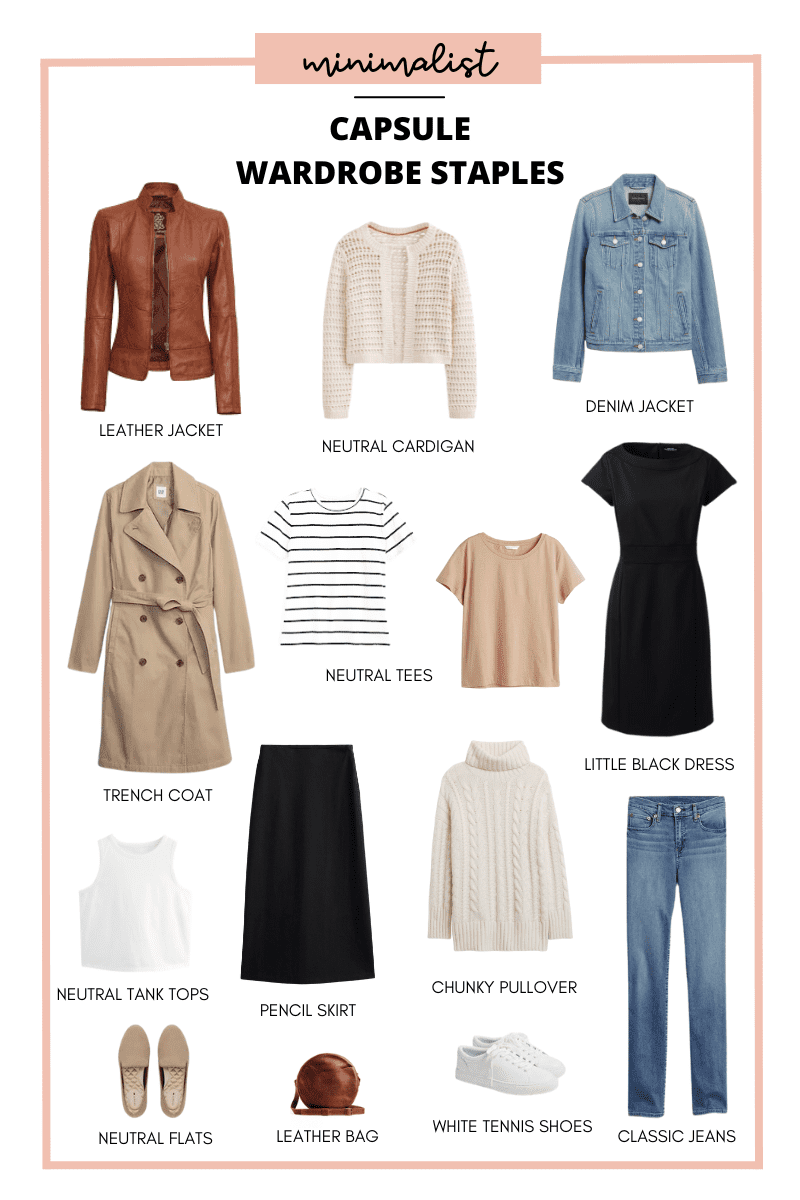
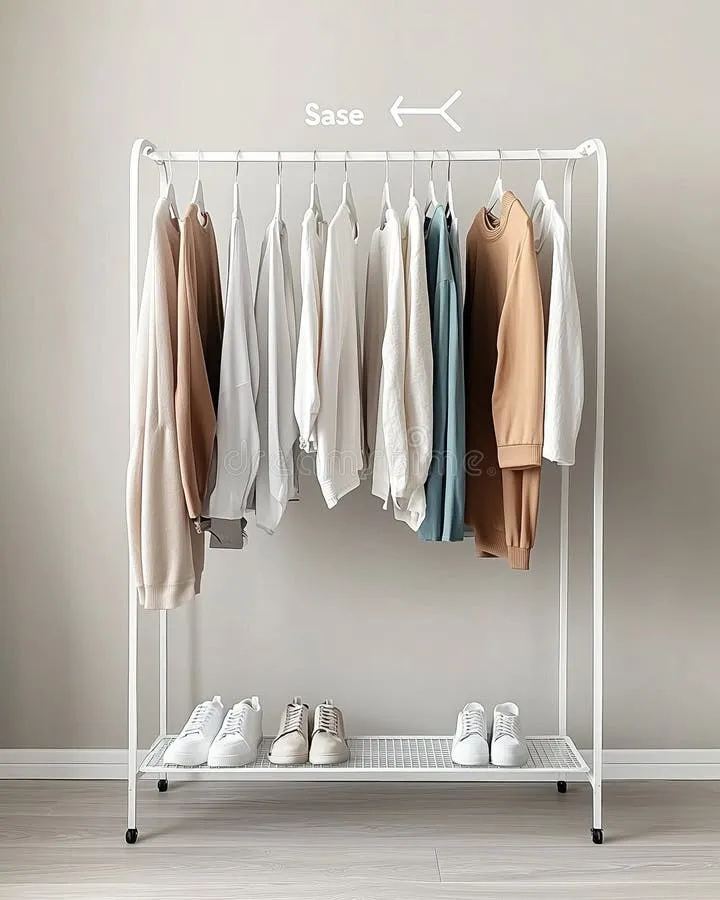
Photo: minimalist capsule wardrobe neutral tones clothing rack New York creative professional fashion, via athomeontheprairie.com
New York City has never suffered from a shortage of options. On any given morning, its inhabitants face a marketplace of extraordinary range — vintage shops in Williamsburg, designer flagships on Madison Avenue, independent labels tucked into Nolita storefronts, tailors in the Garment District who have been doing the same work for forty years. The city is, in the most literal sense, a wardrobe without limit.
And yet some of its most visually compelling residents have decided, with full awareness of all that abundance, to wear the same thing every day.
The Logic Behind the Limitation
The concept of the personal uniform is not new. Its most frequently cited practitioners — certain Silicon Valley executives, a handful of canonical artists — have made it a subject of cultural fascination for years. But the New York version of this practice is distinct in character and motivation. It is less about eliminating vanity and more about redirecting it. Less about rejecting fashion and more about distilling it.
"I think about my clothes the way I think about my work," says Julian Marsh, a product designer based in Tribeca who has worn a version of the same outfit — tailored charcoal trousers, a white or cream shirt, a single rotating blazer — for the better part of a decade. "I spent a long time refining the brief. Now I execute it every day. There's nothing careless about it. If anything, it required more thought than anything I was doing before."
This distinction — between thoughtlessness and deliberate constraint — is central to understanding why the personal uniform has resonated so deeply among New York's creative and professional classes. The people who practice it are, almost uniformly, people who think carefully about aesthetics. They have not stopped caring about how they look. They have simply completed the process of deciding.
Building the System
The methodology behind a successful personal uniform is more rigorous than it might appear. Its practitioners describe a process that resembles, in many ways, the development of a design system: identifying core principles, establishing a limited palette, selecting materials that perform consistently, and eliminating anything that introduces noise into the visual language.
Color is typically the first variable to be resolved. Most uniform practitioners settle on a range of two to four tones — often neutrals anchored by one considered accent — and commit to them absolutely. The effect is a wardrobe that functions as a coherent whole rather than a collection of individual pieces. Everything works with everything. Getting dressed ceases to be a problem requiring a solution and becomes, instead, a brief and pleasurable routine.
"I work in black, ivory, and a very specific shade of camel," says Simone Adler, a Brooklyn-based architect whose wardrobe occupies, by her own accounting, roughly one-third of the closet space it once did. "Those three colors describe me accurately. They also all live together without friction. On the days when I've been tempted to introduce something outside that range — a rust, a cobalt — I've always regretted it. Not because the color was wrong, but because it required a different kind of attention. I don't want to spend that attention on getting dressed."
Adler's comment points to the concept that has done the most to popularize the personal uniform in recent years: decision fatigue. The cognitive science behind it is well-established — the quality of decisions degrades as their quantity increases — and its implications for the morning routine have not been lost on high-performing New Yorkers who regard their mental energy as a finite and precious resource.
Fabric as Investment
If the personal uniform demands anything, it demands quality. When you wear the same thing every day, you wear it out. The economics of the practice, counterintuitively, favor spending more on fewer pieces rather than less on many. This has made the uniform practitioner one of the most valuable customers for makers and retailers who specialize in lasting, well-constructed garments.
The conversations happening in tailoring shops and specialty fabric retailers across the city reflect this shift. Customers arrive knowing exactly what they want — a specific weight of wool, a particular cut of trouser, a shirt collar that behaves consistently — because they have worn previous versions of the same garment until they understood precisely where it succeeded and where it fell short.
"My clients who dress this way are the most demanding and the most loyal," says a tailor on the West Side who has worked in the city for over twenty years. "They know what they want down to the millimeter. And when they find it, they come back for the same thing every year. That relationship is the foundation of what I do."
This investment mentality aligns naturally with the broader values of considered consumption that have taken hold in New York's design-forward communities — the same values that animate the city's vintage culture, its interest in artisanal production, and its growing skepticism toward the accelerated cycles of trend-driven fashion.
The Freedom of the Frame
There is a paradox at the heart of the personal uniform that its practitioners describe with evident satisfaction: the act of constraining choice produces, in practice, a feeling of liberation. The wardrobe, once a source of low-grade daily anxiety, becomes a settled matter. The self, as expressed through dress, becomes legible — to others and, perhaps more importantly, to oneself.
"People sometimes assume that wearing the same thing every day means you've given up on self-expression," says Marsh. "It's the opposite. I've made a very specific statement about who I am and how I move through the world. I made it once, carefully, and now I don't have to make it again every morning."
This is, in the end, the deepest argument for the personal uniform: not efficiency, not minimalism, not the conservation of decision-making bandwidth, but clarity. The clarity of knowing who you are, what you value, and how you wish to present yourself — and having the discipline to let that knowledge govern what hangs in your closet.
In a city that offers every possible version of everything, that kind of clarity is its own form of sophistication.