The Art of the In-Between: How New York's Most Discerning Dressers Navigate Seasonal Change

New York does not change seasons gracefully. The city lurches from suffocating humidity to biting wind, sometimes within a single afternoon, and the wardrobes of its most thoughtful residents have evolved accordingly. For those who take dressing seriously—not as performance, but as practice—the seasonal shift is neither a chore nor a simple matter of swapping sweaters for sundresses. It is, in its own way, an annual act of curation.
The question is not merely what to store and what to surface. It is what each piece genuinely earns, what the coming months will actually demand, and how a wardrobe can be made to work harder without growing larger.
Beyond the Bin Bag: Rethinking What Storage Means
For many New Yorkers, the seasonal transition begins and ends with the vacuum-sealed bag—a practical solution that, for all its efficiency, tends to flatten the process into something purely logistical. The more considered approach treats the off-season wardrobe not as a holding area but as a secondary collection, one that deserves the same intentionality brought to what hangs in plain sight.
Manhattan-based wardrobe consultant Elise Farrow, who works with clients across the Upper West Side and Tribeca, describes the distinction plainly: "Most people store their clothes. The clients I work with archive them. There's a difference. Archiving means you know exactly what's going in, you know its condition, and you know why it's earning the space it takes up."
That spatial calculus is uniquely acute in New York, where closets are often measured in inches rather than feet. Every cubic foot of storage is a deliberate investment, and the pieces that occupy off-season real estate must justify themselves against the square footage they consume.
The Psychology of the Seasonal Edit
What separates a thoughtful seasonal transition from a reactive one is the willingness to treat the process as an edit rather than a migration. Before anything is folded, hung, or boxed, the most discerning dressers ask a harder question: does this piece deserve to return at all?
This is where the psychological dimension of dressing becomes impossible to ignore. Clothes carry weight beyond their fabric. A blazer purchased during a different chapter of life, a dress that no longer fits the person wearing it—not in size, but in identity—these are the pieces that quietly drain a wardrobe of its coherence. Seasonal transition offers a natural pause, a moment of honest reckoning that the busyness of daily life tends to foreclose.
Stylist and fashion consultant Dara Osei, who splits her practice between Brooklyn and the West Village, encourages her clients to approach the off-season review with the same critical eye they would bring to a gallery: "You're not asking whether something is beautiful in the abstract. You're asking whether it belongs in your collection, in this chapter. The answer changes more often than people expect."
Building the Transitional Wardrobe
New York's climate does not observe clean seasonal boundaries, and the most functional wardrobes reflect that reality. The weeks between summer and fall, or between winter and spring, are rarely served by either extreme of a seasonal wardrobe. They require their own vocabulary—a considered set of pieces that bridge temperature ranges without sacrificing coherence.
The transitional wardrobe, as practiced by those who take it seriously, is not a compromise. It is its own mini-collection, built around layering logic and chromatic discipline. A lightweight merino turtleneck that reads as autumnal but functions across a forty-degree temperature swing. A trench coat that anchors the entire transitional period, grounding lighter pieces as the warmth recedes. Tailored trousers in a mid-weight wool that neither bake in September sun nor fail in November chill.
The key, according to Farrow, is resisting the impulse to maintain two fully operational wardrobes simultaneously. "The in-between period is when closets become chaotic," she notes. "You end up with everything out at once and the ability to make a clear decision completely disappears. Defining your transitional capsule in advance—and keeping it small—preserves the clarity that makes getting dressed feel effortless rather than overwhelming."
The Ritual of Return
There is something quietly ceremonial about the moment a winter coat is retrieved from storage, or when the season's first cashmere sweater is unfolded and assessed. The most intentional dressers have learned to honor that moment rather than rush through it.
This means returning items to the active wardrobe in good condition—laundered, repaired where necessary, and assessed with fresh eyes. A piece that spent six months in storage has, in a sense, been resting. Seeing it again with some distance often clarifies whether it still belongs, whether it needs tailoring, or whether it has quietly aged out of relevance.
Osei recommends what she calls a "re-introduction practice"—taking each returning piece out individually, holding it against current pieces already in the wardrobe, and confirming that it speaks the same visual language. "Your style evolves, even subtly, season to season," she explains. "What you wore last February may not reflect who you are this February. The return from storage is a chance to notice that before it's hanging in your closet and creating confusion."
Space as a Design Problem
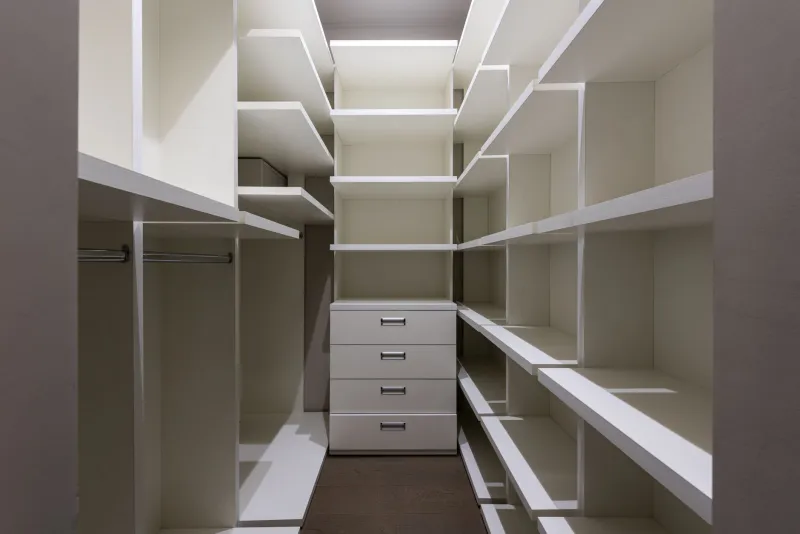
In a city defined by spatial constraint, the off-season wardrobe is also an interior design challenge. Cedar-lined trunks at the foot of a bed, built-in shelving in a hallway alcove, under-bed storage systems with intentional organization—these are not merely practical solutions but opportunities to bring the same aesthetic sensibility to storage that one brings to the living space itself.
Bird & Branch has long observed that the most beautifully curated New York apartments treat storage as part of the design vocabulary rather than a concession to it. Linen garment bags in a consistent palette. Labeled cedar boxes stacked with architectural precision. A dedicated shelf for folded knitwear, organized by weight and tone. These details reflect an understanding that the care given to unseen things shapes the experience of the seen.
Making Every Piece Earn Its Place
Ultimately, the seasonal transition is an expression of a broader philosophy—one that Bird & Branch has always recognized as central to how New York's most considered residents approach their lives. The city demands efficiency, but the people who thrive here understand that efficiency and intentionality are not in conflict. A smaller wardrobe, rotated with care and edited without sentiment, performs better than a larger one managed carelessly.
The second closet, in this sense, is not a place for what you cannot decide about. It is a curated reserve—a collection of pieces that have earned their temporary absence and will return, in due course, with renewed purpose. That discipline, applied season after season, is what transforms a wardrobe from an accumulation into something genuinely worth living with.