Wardrobes That Evolve: The New York Women Dressing Through Every Reinvention
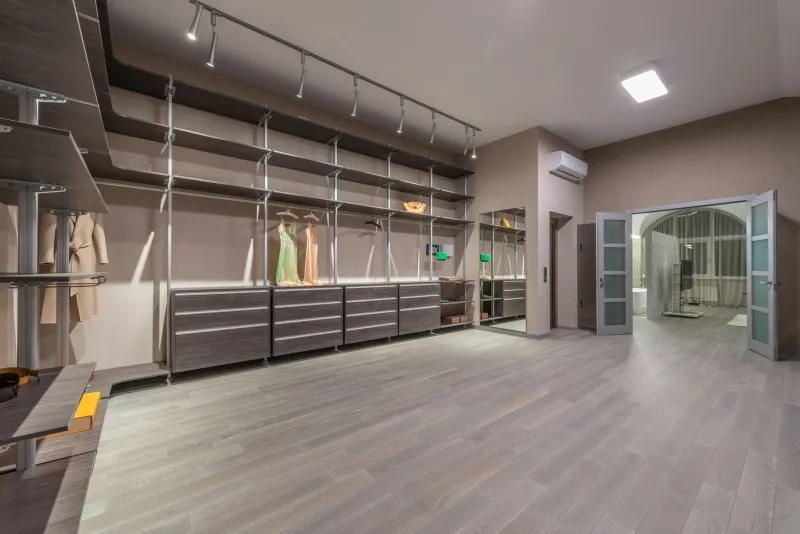
There is a particular kind of clarity that arrives somewhere between the third decade and the fifth. It is not the clarity of having figured everything out—New York, more than most cities, tends to complicate any such certainty—but rather the clarity of understanding what no longer belongs. In closets across Brooklyn, the Upper West Side, and Astoria, women are standing before their wardrobes and asking a different question. Not what do I have? but who am I becoming, and what do I need to get there?
This shift in perspective has given rise to what stylists are quietly calling the "evolving wardrobe"—a curated collection assembled not around seasons or trends, but around the full, unpredictable arc of a woman's life. It is less a capsule wardrobe in the minimalist tradition and more a living system, one designed to absorb change without requiring demolition.
The Problem with Starting Over
For years, the dominant narrative around wardrobe reinvention encouraged a kind of scorched-earth approach. Change your life, change your closet. Purge the old, usher in the new. It made for compelling magazine spreads, but it proved costly in practice—financially, environmentally, and psychologically.
"I see clients who have rebuilt their wardrobes three or four times by the time they reach their forties," says Margaux Tillson, a personal stylist based in the West Village who works primarily with professional women navigating career transitions. "Each time, they spend significantly. Each time, they donate pieces that still had value. And each time, they arrive at the next chapter feeling like they're starting from zero again. That cycle is exhausting, and it's also unnecessary."
Tillson's approach centers on what she calls "wardrobe continuity"—identifying the pieces that will carry forward across life phases and distinguishing them clearly from those that belong to a specific moment. The former deserve investment. The latter deserve a lighter touch.
Pieces That Cross Chapters
The architecture of a wardrobe built for longevity looks different from one assembled for trend relevance. It favors structure over novelty, fabric quality over surface decoration, and versatility over occasion-specificity.
A well-cut blazer in a neutral wool, for instance, moves from the boardroom of a corporate career into the studio of a creative pivot without alteration. A pair of tailored trousers in charcoal or deep navy serves equally across a decade of professional contexts, personal milestones, and social occasions. A silk blouse in ivory or champagne carries the same quiet authority whether worn to a client presentation or a gallery opening.
"The pieces that survive every edit are the ones with good bones," says Tillson. "They're not boring—they're disciplined. They allow the woman wearing them to be the variable."
This distinction matters. The most enduring wardrobe investments are those that subordinate themselves to the wearer rather than defining her. They do not announce a particular era or aesthetic movement. They simply perform, consistently and elegantly, across whatever context the woman brings to them.
The Psychology of Editing
If investment is one half of the evolving wardrobe, editing is the other—and it is arguably the more demanding practice. Letting go of clothing is rarely a purely practical exercise. Garments accumulate meaning. They hold memory. A blazer from a first important job, a dress worn to a significant dinner, a coat purchased during a period of becoming—these are not merely objects.
"There's grief in the edit," acknowledges Serena Voss, a New York-based therapist who has written about the emotional dimensions of personal style. "When you release a piece of clothing, you're sometimes releasing the version of yourself who wore it. That's real. It deserves acknowledgment."
Voss encourages her clients to approach wardrobe editing with the same intentionality they might bring to other transitions. Rather than a frenzied seasonal purge, she recommends a slower, more reflective process—one that asks not only whether a piece still fits, but whether it still belongs to the life being built.
The distinction is important. A piece may fit the body and yet no longer fit the life. Conversely, a piece may feel aspirational—slightly ahead of where a woman currently stands—and yet be entirely worth keeping as a forward-facing investment.
When Life Changes Faster Than the Wardrobe
Some transitions arrive gradually: the slow accumulation of professional authority, the quiet deepening of personal taste, the gradual migration from one neighborhood aesthetic to another. Others arrive with the abruptness that New York is known for—a career pivot, a relationship ending, a relocation from one borough to another that somehow shifts everything.
In these moments, the wardrobe can feel suddenly misaligned. The clothes one owns seem to belong to someone else's life.
Daniela Cruz, a forty-three-year-old architect who transitioned from a large firm to her own practice four years ago, describes arriving at her closet the morning after submitting her resignation and feeling an acute disconnect. "Everything I owned was designed for a version of my life that no longer existed," she says. "Very polished, very corporate, very correct. And I was moving toward something that required a different kind of authority—more personal, less institutional."
Rather than replacing her wardrobe wholesale, Cruz worked with a stylist to identify the pieces that carried forward—the tailored items that would simply be worn differently, styled with greater ease—and those that genuinely no longer served her. The result was not a new wardrobe but a refined one, adapted rather than abandoned.
"I kept more than I expected to," she says. "The good pieces translated. I just had to see them differently."
The Investment Calculus
For women building wardrobes designed to evolve, the calculus of investment shifts considerably. The relevant question is no longer what will I wear this season? but what will I still be wearing in ten years?
This longer horizon changes what deserves significant expenditure. A coat in a classic silhouette from a maker known for construction quality becomes a decade-long companion rather than a single-season statement. A pair of leather boots resoled twice earns its price many times over. A cashmere sweater maintained with care outlasts a dozen of its synthetic counterparts.
Tillson is direct with her clients about this arithmetic. "I tell them to think about cost per wear, but over a realistic timeline—not one season, but a decade. When you frame it that way, the economics of quality become very clear."
Building Forward
The women who have mastered the evolving wardrobe share a particular quality: they dress not only for who they are today, but with deliberate attention to who they are in the process of becoming. They hold their current aesthetic with a certain looseness, remaining open to the refinements that new chapters will inevitably bring.
This is not indecision. It is, in fact, a sophisticated form of self-knowledge—the recognition that identity is not fixed, that style is a conversation rather than a declaration, and that the most enduring wardrobes are those built with enough intelligence and flexibility to grow alongside the women they serve.
In a city defined by constant reinvention, that may be the most New York approach of all.